Checklists
Janitorial inspection checklist by area
Copy this janitorial inspection checklist by area, with what a pass looks like on every line, plus a simple scoring method and a plan for fails.
November 12, 2026 · 5 min read
A janitorial inspection checklist is a list of areas and the things a supervisor looks at in each one, with a clear pass or fail for every line. Below is a checklist you can copy, split by area, with what "pass" looks like written next to each item.
Use it as a janitorial inspection template for your own buildings. Delete lines that do not apply and add the ones your scope of work asks for.
How to use this checklist
Walk the building in the same order every time. Entrance first, janitor closet last. Inspect after the crew finishes, not while they are working, and look at things from where a tenant stands, then crouch and look at the edges.
Mark each line pass or fail. Do not give half marks. If you are unsure, it is a fail until you can say why it passes.
Entrance and lobby
- Entrance mats: pass means flat, vacuumed, no standing water or salt crust, and no curled corners.
- Glass doors and sidelights: pass means no fingerprints or smears at hand height when you look at them against the light.
- Floor: pass means no grit at the threshold and no dust line along the baseboard.
- Reception desk and touch points: pass means counters, buttons and door handles are wiped and free of residue.
- Waste and recycling bins: pass means emptied, liner replaced, no sticky rim.
Offices and open work areas
- Desks and ledges: pass means cleared surfaces are dusted, and nothing on a desk has been moved.
- Floors and carpet: pass means vacuumed with no visible crumbs under desks or along walls.
- Bins: pass means emptied, liners fitted, no overflow beside the bin.
- Light switches and door handles: pass means no marks or tacky spots.
- Partition glass and monitors left on desks: pass means no fingerprints on glass, and equipment left untouched.
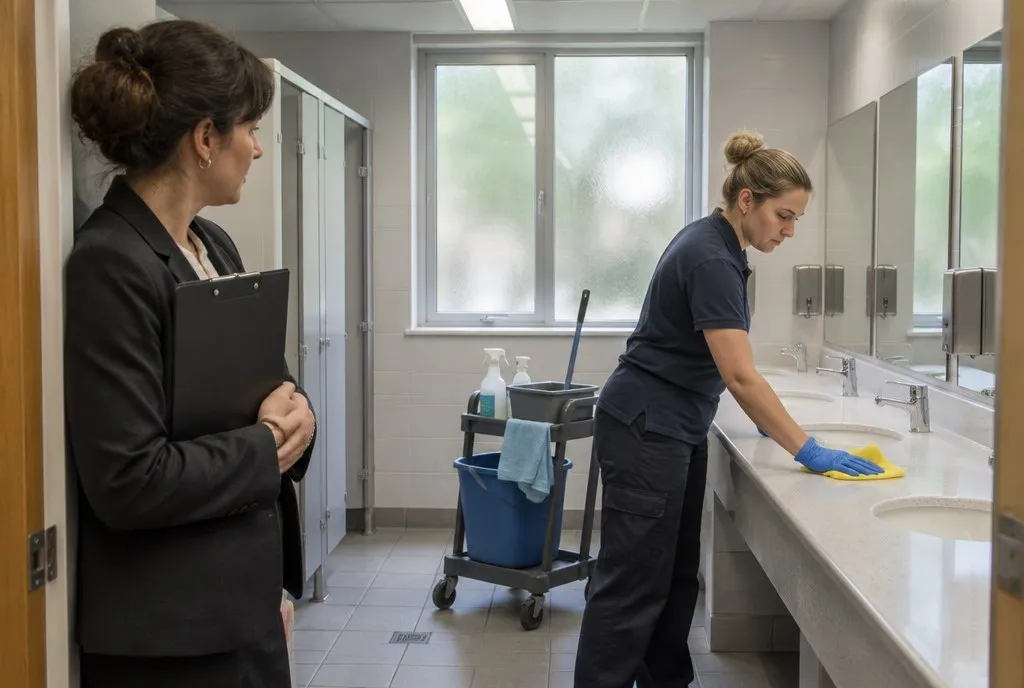
Washrooms
For a deeper list, see the washroom cleaning checklist.
- Toilets and urinals: pass means no marks inside the bowl, under the rim or on the base, and no odour.
- Sinks and taps: pass means chrome has no water spots and the basin has no residue.
- Mirrors: pass means streak free from two angles.
- Dispensers: pass means soap, paper towel and toilet paper are full and the dispensers are wiped outside.
- Floor and grout lines: pass means no standing water, no dirt in grout near the toilets, and clean floor drains.
- Partitions and walls: pass means no splashes or marks at splash height.
- Waste bins: pass means emptied, with a fresh liner.
Break rooms and kitchenettes
- Counters and tables: pass means wiped dry with no sticky patches.
- Sink: pass means clear of food debris, with a clean tap and drain cover.
- Microwave and appliance exteriors: pass means no splatter on the outside, and handles are wiped.
- Floor: pass means swept and mopped, with no dried spills under the table edges.
- Bins: pass means emptied, liner replaced, no smell.
Hard floors and carpet
- Hard floors: pass means no streaks, no haze, no mop marks and no build-up in corners.
- Edges and baseboards: pass means no dust or dried splashes along the edge.
- Carpet: pass means vacuumed in lanes, with no stains left from the last visit that were not logged.
- Entry to elevators: pass means no grit and no tracks from the cart.
Stairwells and corridors
- Handrails: pass means wiped and not tacky.
- Steps and landings: pass means no debris, and corners are clean.
- Walls and doors: pass means no scuffs you can remove, and door push plates are clean.
- Lights and vents: pass means no heavy dust you can see from the floor.
Janitor closet
A janitorial closet inspection checklist is short, and it tells you a lot about how the whole crew works.
- Chemicals: pass means every bottle is labelled and stored upright, with no unmarked containers.
- Mop and buckets: pass means rinsed, stored to dry and not left standing in dirty water.
- Cloths: pass means colour coded and kept separate for washroom and general use.
- Sink and floor: pass means clean and clear of clutter.
- Equipment: pass means vacuums and scrubbers are put away with cords wrapped.
- Supplies: pass means paper, liners and soap are stocked for the next shift.
How do you score a janitorial inspection sheet?
Count the passes and divide by the number of lines you checked. A 40 line inspection with 36 passes scores 90 percent. Keep the formula the same every month so scores can be compared.
Pick a pass mark with your client and write it down. The number is up to you and your contract. What matters is that everyone knows it before the first inspection.
Consider flagging a few lines as critical, such as toilets, touch points and spills that could cause a fall. A single fail on a critical line should fail the whole area, whatever the percentage says.
What do you do with fails?
A fail with no follow-up is just a complaint. For each failed line:
- Take a photo showing the problem.
- Write one short sentence on what is wrong and where.
- Assign it to a named person with a due date.
- Ask for a photo of the fix.
- Compare the photos, then either close it or send it back for rework.
Track repeat fails by location. If the same corner fails three weeks running, the problem is probably the method or the time allowed, not the cleaner. For help designing the questions themselves, read about janitorial inspection forms.
Common questions
How often should you inspect?
It depends on the area and the contract. Busy washrooms and lobbies are often inspected more often than storage rooms. See the janitorial quality control plan for how to set frequency by area.
How long should an inspection take?
Long enough to look properly, short enough that supervisors do it every time. If a floor of ordinary offices drags, the form is probably too long.
Paper or phone?
Paper works until you need to find last month's fail or send a report to the client. Inceplio runs this kind of checklist on a phone, even offline, and sends a scored PDF report. You can try it free for 30 days at inceplio.com.