How-to
Commercial cleaning proposal: what to include
What goes in a commercial cleaning proposal, in order, with example wording for the scope and quality control sections you can adapt.
November 12, 2026 · 5 min read
A commercial cleaning proposal has seven parts, in this order: the buyer's problem, the scope of work by area and frequency, staffing and supervision, quality control, price, term and start-up plan, and insurance and references. A buyer comparing three proposals will read the scope and the quality section first, so put your effort there.
Use this as a template for a janitorial proposal, a cleaning services proposal or a response to a formal bid. Adjust the order only if the buyer's bid documents require another one.
1. Start with the buyer's problem in their words
Open with two or three sentences using what the buyer told you during the walk-through. Use their words, not yours.
Example: "You told us washrooms on floors 3 and 4 are not being restocked by mid-afternoon and that tenants have complained twice this quarter. This proposal covers a night crew and a day porter for those floors."
If you cannot write this paragraph, you have not asked enough questions yet. Go back and walk the building again. The contracts guide covers what to look for.
2. What goes in the scope of work?
List every area, what is done there, and how often. Group by area, not by task. Buyers think in rooms.
Example wording you can adapt:
- Entrance and lobby: vacuum mats and sweep hard floor daily, damp mop daily, clean glass doors and push plates daily, remove mat debris weekly.
- Washrooms: clean and disinfect toilets, urinals, sinks and touch points daily, restock paper, soap and dispensers daily and on day porter rounds, mop floors daily, detail grout lines monthly.
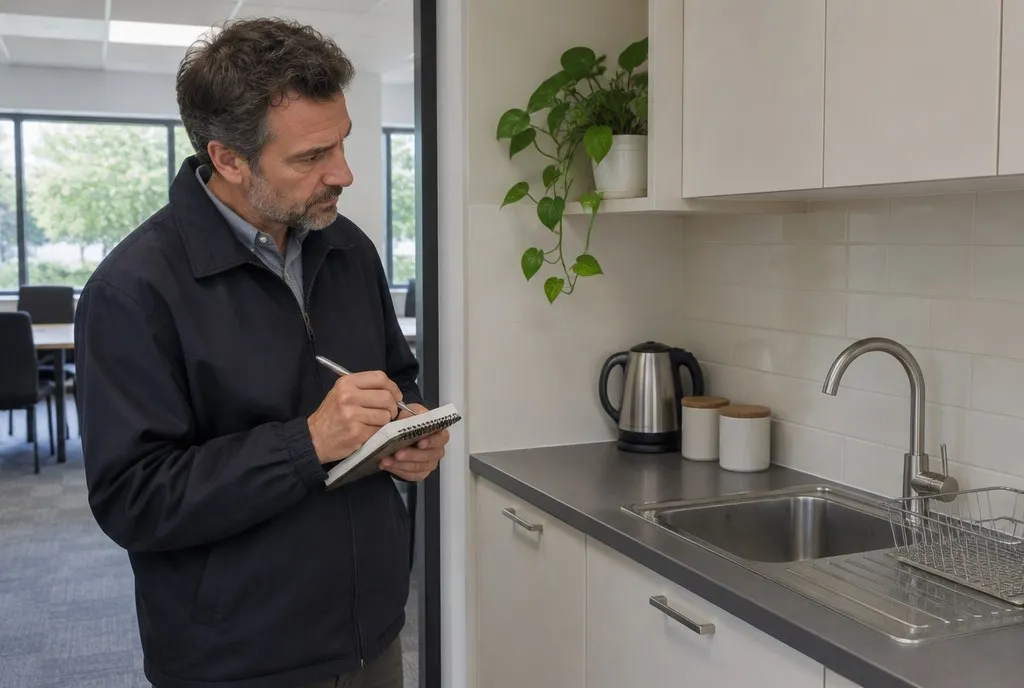
- Kitchenettes: wipe counters, sinks and appliance exteriors daily, empty garbage and recycling daily, clean inside microwaves weekly.
- Open office: empty bins daily, vacuum carpet daily, spot clean carpet as needed, dust horizontal surfaces weekly.
- Stairwells: sweep or vacuum weekly, damp mop monthly, clean handrails weekly.
- Periodic work: carpet extraction twice a year, strip and wax hard floors once a year, interior glass monthly.
Replace these with the frequencies you walked and agreed. Do not copy numbers you cannot staff.
Say what is not included. "Exterior windows above ground level, pressure washing, biohazard clean-up and moving of furniture are not part of this scope."
3. How will the building be staffed and supervised?
Describe the crew size, the hours and the shift pattern. Name the supervisor, say how often that person visits and who covers when they are away.
State how you handle absence. A buyer wants to know that a missed shift does not mean a missed night.
4. What does the quality control section say?
This is where most proposals are thin. "We inspect regularly" is not an answer. Say what happens, how often and what the client sees.
Example wording you can adapt:
- The supervisor inspects the building [weekly, or twice a week] using a written inspection form built for this site.
- Each inspection is scored. A failed item is logged with a photo, assigned to a named person with a due date, and checked again after the fix.
- The client contact receives a report after each inspection. A sample is attached.
- Complaints are logged on the day they arrive, answered within [your time], and closed only after the supervisor has verified the fix on site.
- Once a month we meet or call to go through the scores, open follow-ups and any repeating problem areas.
For a full structure, see the janitorial quality control plan guide. Attach one sample report, even if it is from a mock inspection.
5. How should you present the price?
Show one clear price for the scope above, with the billing period stated. Split out extras that the buyer may choose, such as periodic work or day porter hours, so they can compare against other bids.
List what the price excludes. Supplies, consumables and equipment are common sources of arguments, so say who provides them.
Do not bury the price in the last page of a long document. A buyer who has to hunt for it will assume you are hiding something.
6. What term and start-up plan should you propose?
State the length of the term, the notice needed to end it, and how price changes are handled during the term.
Then give a start-up plan for the first 30 days: when you will do the first deep clean, when the supervisor will first walk the building with the client, and when the first inspection report will arrive. Buyers remember the first month more than the last page.
7. Insurance and references
Attach the insurance certificate and name two or three reference contacts, with permission. If a buyer has to ask for either one, you have already lost some confidence.
If you have a program for recording each inspection and sending a report, you can offer a sample. Inceplio is one option for that, and it has a 30-day free trial.
Common questions
How long should a cleaning proposal be?
Long enough to cover the seven parts and short enough to read in one sitting. For a single building that is usually a handful of pages plus attachments.
Should I use a cleaning proposal template?
Yes, for structure. Build the scope and the opening paragraph fresh for each building, because buyers can tell when they are reading a template.
What is the difference between a bid and a proposal?
A bid is usually a response to formal documents with set requirements and a price. A proposal can be more open and explain your approach. In practice buyers use the words loosely, so read the request carefully.
Do I put my price first?
Not first, but not last either. Show it after the scope and quality sections, in a place the reader can find in seconds.