How-to
Finding commercial cleaning contracts
Where commercial cleaning contracts come from, how to qualify one before you bid, and what makes a buyer pick one contractor over another.
November 12, 2026 · 4 min read
Most commercial cleaning contracts come from five places: property managers, facility managers, public tenders, larger contractors who subcontract, and referrals from buildings you already clean. Which one suits you depends on how big your crews are and how much paperwork you can carry.
Finding the contract is the easy half. Deciding which ones to bid on, and showing a buyer why you are the safe choice, decides whether you grow or just get busy.
Where do commercial cleaning contracts come from?
Property managers. One property manager often looks after several buildings. Win one and you may see the others. They care about tenant complaints, so they ask how you handle them.
Facility managers. In-house facility teams at offices, clinics, schools and warehouses choose cleaners for their own site. They tend to want a named supervisor and a quick response when something goes wrong.
Public tenders. Governments, school boards and universities post cleaning work as formal bids. In Canada the federal tender portal is CanadaBuys, and in the US federal contracting opportunities are on SAM.gov. Both describe themselves as official government sites. Provincial, state, municipal and school board bids are usually posted on their own sites, so search for each organization you want to work for.
Subcontracting. Larger contractors sometimes need local crews for sites outside their usual route or for overflow. The margin is thinner, but the work is steady and it builds references.
Referrals from existing buildings. A tenant who moves, or a manager who changes jobs, takes your name with them. This is the cheapest source, and it only works if the current buildings are well looked after.
How do you find commercial cleaning contracts in your area?
Do the simple things consistently:
- List the buildings within your service radius that are big enough to need a night crew. Look up who manages each one.
- Send a short note to each manager asking when the current contract ends and whether they accept proposals before then.
- Set up an alert on the tender portals for your region and the words "janitorial" and "custodial".
- Tell every current client you are taking on one or two new buildings. Ask if they know any managers who are unhappy with their cleaner.
- Introduce yourself to the larger contractors in your area. Ask about overflow work.
If you want to get office cleaning contracts specifically, property managers of mid-size office buildings are the most direct route.
How do you qualify a contract before you bid?
A bid costs time. Walk away from the ones that will lose you money.
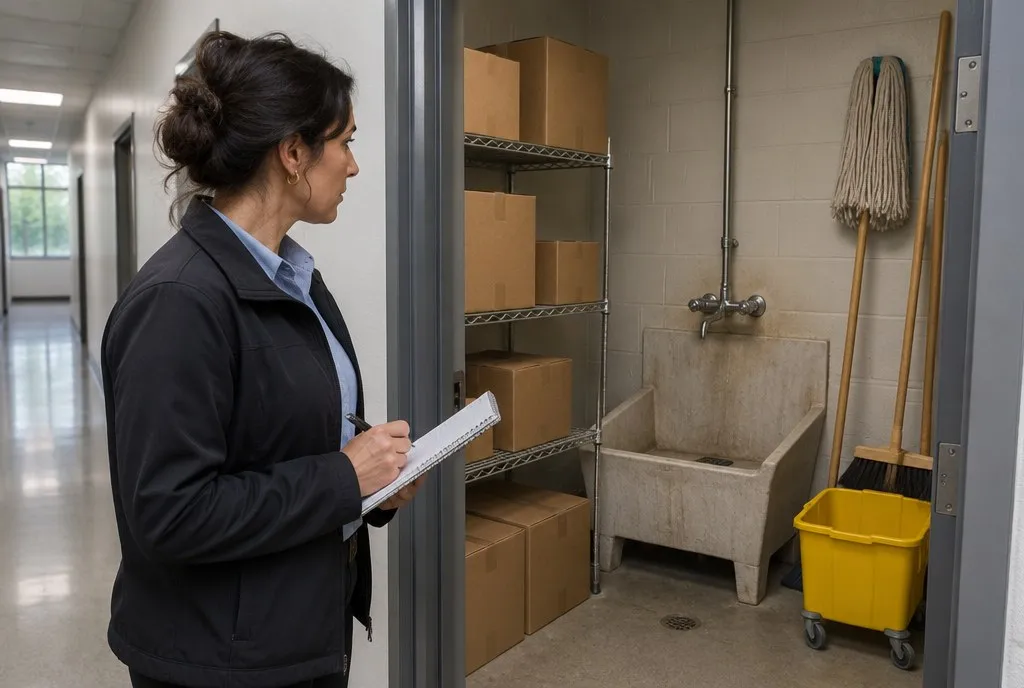
- Walk the building. Go at the time the cleaning happens if you can. Look at the washrooms, the entrance, the kitchenettes and the floors. Note how much of the floor area is carpet, hard floor and stairs.
- Read the scope. Is it written by area and by frequency, or does it just say "clean the premises"? Vague scopes lead to arguments about what was included.
- Check the frequencies. Daily, weekly, monthly and periodic work all cost different amounts of labour. Ask what is expected for the periodic items such as strip and wax, carpet extraction and window work.
- Read the term. How long is it, and how can either side end it? A short term with a long notice period is different from a long term with a termination clause.
- Ask what is wrong now. Why is the buyer changing? The answer shows you what they will watch hardest.
- Check what you need to provide. Insurance limits, background checks, safety training and supplies are often spelled out in the bid documents.
If you cannot staff it properly, or the scope is vague and the buyer will not clarify it, pass.
What makes a buyer pick you?
Buyers read many proposals that look alike. These things separate them:
- Insurance and references in order. Have the certificate and two or three reference contacts ready before you are asked.
- A clear scope. A scope by area and frequency that matches the walk-through shows you looked. See how to write one in the commercial cleaning proposal guide.
- Proof of how you check quality. Many bidders say "we inspect regularly". Few say how often, what gets checked, and what the client receives. A short description of your quality control plan, with a sample report, answers the question before it is asked.
- A named supervisor. The buyer wants to know who they call, and what happens when that person is away.
- Honest start-up planning. A realistic first month with a clear handover is more convincing than promising a perfect first night.
You can keep that last item easy to prove if you record your inspections as you go. A tool like Inceplio turns each inspection into a scored PDF report you can show a prospect.
Common questions
How do I find commercial cleaning bids?
Check the public portals for your region, set up alerts for "janitorial" and "custodial", and ask property managers directly when their current contract ends. Many private contracts are never advertised.
Do I need insurance before I bid?
Many buyers ask for proof in the bid documents. Check the requirements in each one, and talk to your broker about what limits suit the work. This is not legal advice.
Should I bid on every tender I find?
No. Qualify each one. A tender with a vague scope, a very short term or requirements you cannot meet is likely to cost you more than it earns.
Are janitorial contracts always long term?
No. Terms vary, and some can be ended with notice. Read the term and the termination clause before you submit a price.